


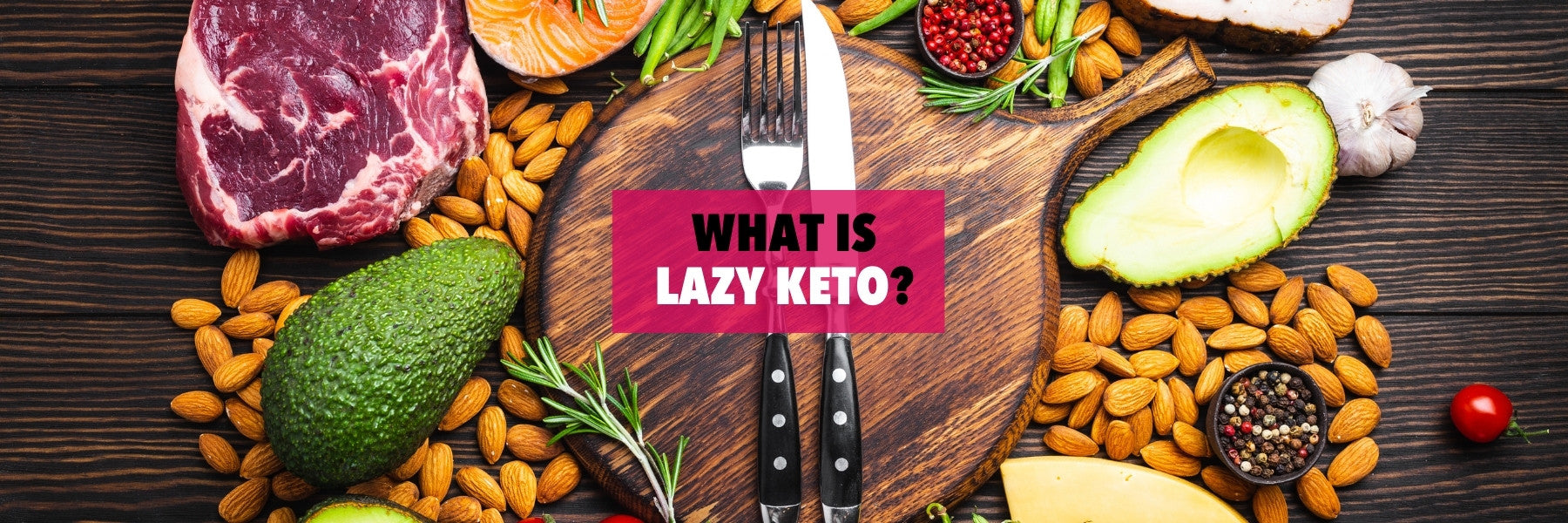
I’ll be upfront with you. I’m not a massive fan of the term “lazy keto.” Never have been.
Cutting your carbs down to under 50g a day takes real effort and real thought. There’s nothing lazy about it.
But the name has stuck, and honestly? The approach itself has genuine merit for a lot of people.
I’ve worked with hundreds of keto beginners at The Keto Collective, and the single biggest reason people give up isn’t that they don’t understand the science. It’s that strict keto feels like too much, too fast. The macro tracking. The food weighing. The guilt when you accidentally eat 3g more carbs than planned.
So they quit. Go back to toast and cereal. And all that good intention goes out the window.
Lazy keto stops that from happening. It gives you about 80% of the benefits with about 50% of the hassle. And for most people, especially those just starting out, that’s a far better deal than doing strict keto for two weeks and then giving up entirely.
Let me explain how it all works.
What Is Lazy Keto?
Lazy keto is a simplified version of the standard ketogenic diet. You still keep your carbs low, usually under 50g of net carbs per day. But you don’t track your fat and protein intake with any precision.
On a standard keto diet, you’d be aiming for roughly:
That means weighing food, logging meals in an app, and doing mental arithmetic every time you eat a handful of almonds.
With lazy keto? You focus on one thing: keeping carbs under 50g. That’s it. You still eat plenty of fat and moderate protein, but you’re not measuring every gram. You’re using common sense and a rough idea of what’s in your food rather than a spreadsheet.
I’ve seen this approach work brilliantly for people who have demanding jobs, young kids, or just a general allergy to food tracking apps. And there’s no shame in any of that.
Why I Don’t Love the Name
Can I have a quick rant? The word “lazy” implies you’re doing something half heartedly or not putting in the work. That’s rubbish.
If someone tells me they’ve cut bread, pasta, rice, potatoes, and sugar out of their diet and they’re keeping carbs under 50g a day, I’m impressed.
That takes discipline. It takes saying no to the biscuit tin at work, skipping the chips at the pub, and rethinking almost every meal you’ve eaten for the last 20 years.
A better name would be “flexible keto” or “simplified keto.” But the internet has decided on lazy keto, so here we are.
At The Keto Collective, we just call it “keto ish.” It means you’re following the general principles of low carb, high fat eating without being militant about the numbers. Good enough.
Lazy Keto vs Strict Keto: What’s Actually Different?
The food is mostly the same. Eggs, meat, fish, cheese, green veg, nuts, healthy oils, butter. Both approaches eat from the same shopping list.
The difference is in the tracking and the metabolic precision.
Strict keto aims to keep you in nutritional ketosis consistently. That means your body is producing ketone bodies from fat breakdown and using them as its primary fuel source. To maintain this state, you need the right ratio of macros. Not just low carbs, but high enough fat and moderate enough protein to keep the metabolic machinery running.
Lazy keto aims to get you close to ketosis, or at least significantly reduce your carb intake compared to a standard Western diet. You might drift in and out of ketosis depending on what you eat each day. Some days you’ll be bang on. Other days you might be slightly over.
The practical effect? Strict keto typically produces faster weight loss and more consistent energy levels. Lazy keto produces slower but still meaningful weight loss, with the trade off of being much easier to stick to over months and years.
I always tell my clients the same thing: the best diet is the one you actually follow!
A perfectly designed keto plan that you abandon after 10 days is worth less than a slightly imperfect lazy keto approach that you maintain for six months.
The Benefits of Going Lazy
Let’s give credit where it’s due. Lazy keto has some genuine advantages.
It’s sustainable for real life. Most people don’t have the time or inclination to weigh every meal. Lazy keto removes that barrier. You can eat out without panicking. You can grab food on the go without a calculator.
It reduces decision fatigue. On strict keto, every food choice involves a mini calculation. Lazy keto simplifies it to one question: is this low carb? If yes, eat it.
It still cuts out the worst offenders. Even without perfect tracking, keeping carbs under 50g means you’re automatically avoiding bread, pasta, rice, potatoes, sugary drinks, sweets, and most processed junk. That alone is a massive improvement over a typical British diet.
It can lower blood sugar and improve energy. Research published in the British Journal of Nutrition (2013) showed that low carbohydrate diets reduced fasting blood glucose and improved insulin sensitivity in overweight participants. You don’t need to be in strict ketosis to see these benefits. Simply reducing carbs makes a measurable difference.
It works as a gateway. I’ve lost count of how many people started with lazy keto at The Keto Collective and then gradually moved to strict keto once they’d built confidence. It’s a brilliant starting point.
Lazy Keto Drawbacks
I wouldn’t be doing my job as a nutritional therapist if I only told you the good stuff. Lazy keto has real limitations and you should know about them before deciding if it’s right for you.
You might not reach ketosis. This is the big one. Keeping carbs under 50g doesn’t guarantee ketosis. The standard keto threshold is typically 20 to 30g net carbs for most people. At 50g, some people will be in ketosis and others won’t. Without testing, you genuinely don’t know.
Protein can be a wildcard. Without tracking, it’s easy to eat too much protein relative to fat. Your body can convert excess amino acids into glucose through a process called gluconeogenesis. Now, before the keto police pile on, let me clarify something.
Gluconeogenesis is demand driven, not supply driven. Your body produces a baseline amount of glucose because certain cells, like red blood cells and parts of your kidney, genuinely need it. They can’t run on ketones. Eating a bit extra protein doesn’t automatically flood your system with glucose.
But. Consistently eating very high protein with moderate fat (think 200g protein and only 80g fat) can raise insulin enough to make ketone production less efficient. It’s not the disaster some keto forums claim, but it does matter if your goal is consistent ketosis.
My practical advice? Keep protein moderate at roughly 0.8 to 1.2g per pound of lean body mass. Prioritise fat. And don’t lose sleep over the occasional high protein day.
Whole food quality can slip. Lazy keto sometimes becomes “dirty keto” by accident. When you’re not tracking, it’s tempting to rely on processed low carb products, takeaway bunless burgers, and keto labelled snack bars that are full of maltitol and artificial rubbish. The carb count might be fine but the nutritional quality is poor.
I see this pattern constantly. Someone tells me they’re doing lazy keto, I ask what they ate yesterday, and it’s a protein shake, a pepperoni stick, some cheese strings, and a low carb wrap from Tesco. Technically under 50g carbs. But where are the vegetables? Where are the healthy fats? Where’s the actual food?
Lazy keto doesn’t mean lazy food choices. You should still be eating real whole food most of the time.
The Carb Creep Problem (and How to Spot It)
This is something I’ve watched happen to dozens of my clients and nobody talks about it enough.
Carb creep is what happens when your daily carb intake gradually increases over time without you realising. It’s subtle. It’s slow. And it’s the number one reason lazy keto stops working for people.
Here’s how it typically plays out.
Month one. You’re careful. Eggs for breakfast, meat and green veg for lunch and dinner. You’re probably eating about 30g carbs. You feel great and you’re losing weight.
Month three. You’ve relaxed a bit. More tomatoes in the salad. An onion in the bolognese. A splash more milk in your tea. Still feels low carb. Probably around 40 to 45g.
Month six. The portions have crept up. Berries most mornings. That almond milk flat white is a daily thing now. The odd low carb wrap. A few squares of dark chocolate after dinner. You’re probably pushing 60 to 70g and you don’t realise it.
Month nine. Weight loss has completely stalled. You tell yourself you’re “still doing keto” but deep down you know something’s off. You just don’t want to check because you suspect the answer.
I had a client last year who came to me genuinely puzzled about why she’d stopped losing weight on “keto.”
We tracked her food for one week. She was eating 85g of carbs per day. Not even close to keto. She was genuinely shocked because she’d been so careful at the start.
That’s carb creep. Your brain slowly normalises the exceptions until they become the rule.
Warning signs to watch for:
-
Weight loss has stalled for more than 8 weeks
-
You’ve lost that sharp mental clarity you had in the early weeks
-
You’re eating more keto treats than actual whole meals
-
You haven’t checked a food label in weeks
-
Your clothes aren’t getting any looser despite “being good”
-
You can’t remember your last ketone reading (because you know it won’t be great)
The fix is dead simple.
Do one week of honest tracking. Seven days in an app like MyFitnessPal or Cronometer. Log absolutely everything including the milk in your tea, the dressing on your salad, and that handful of cashews you grabbed while cooking.
You’ll see exactly where the carbs have crept in. Then you can make informed decisions about what to cut back.
Is Lazy Keto Actually Healthy?
This depends entirely on what you were eating before.
If your starting point is a typical British diet of cereal for breakfast, sandwich for lunch, pasta for dinner, and biscuits throughout the day, then lazy keto is a massive step forward. You’ll be eating fewer processed carbs, more protein, more healthy fats, and probably more vegetables than before. Your blood sugar will stabilise. You’ll likely lose weight. You’ll probably sleep better.
A 2020 review found that low carbohydrate diets consistently improved markers of metabolic syndrome including blood pressure, triglycerides, and fasting glucose. These improvements occurred even in studies where participants weren’t in confirmed ketosis, which is exactly what lazy keto looks like.
But there are three genuine concerns.
Nutrient gaps. Without tracking, you might under eat vegetables, which means missing out on fibre, vitamins, and minerals. I always tell my lazy keto clients to aim for at least 3 portions of above ground vegetables daily. Broccoli, spinach, courgettes, peppers, cauliflower. If your plate has green on it, you’re probably fine.
Electrolyte depletion. When you cut carbs, your kidneys excrete more sodium and water. This can lead to headaches, fatigue, and muscle cramps, particularly in the first few weeks. This is the keto flu and it catches lazy keto people just as hard as strict keto people. Add salt to your food generously. Consider an electrolyte supplement. Drink plenty of water.
Food quality drift. As I mentioned above, lazy keto can easily slide into a diet of convenient but nutritionally poor foods. The approach only works health wise if you’re eating real food, not just low carb food.
How to Start Lazy Keto (Practical Advice)
I’ve helped a lot of people start this, so here’s exactly what I’d suggest if you’re beginning from scratch.
Week one: clean out the cupboards. Get rid of the bread, pasta, cereal, rice, potatoes, and anything with sugar in the first three ingredients. If it’s not in the house, you won’t eat it. This sounds dramatic but it’s the single most effective thing you can do.
Week two: build your go to meals. You need 5 to 7 meals that you can make without thinking. Not fancy recipes. Simple stuff. Bacon and eggs. Chicken thighs with buttered veg. Steak with salad. Salmon with asparagus. Cheese omelette. Write them down and rotate them.
Week three: sort your snacks. This is where most people fall apart. They get hungry between meals, panic, and grab whatever is nearest. Stock up on cheese, nuts (not cashews, they’re too carby), pork scratchings, boiled eggs, and decent keto snacks.
This is actually why we started The Keto Collective in the first place. I kept hearing from people that they couldn’t find convenient keto snacks that weren’t full of artificial rubbish.
Our Keto Bars have 2.2 to 2.4g net carbs per bar and are made from almonds, sunflower seeds, and chicory root fibre. No sugar alcohols, no artificial sweeteners. They’re the kind of thing you can throw in your bag and eat when hunger hits without worrying about your carbs.
If you prefer something sweeter, our Keto Cookies come in at 1.5g net carbs each. Vanilla, chocolate, or the new spiced ginger flavour. Made with British grass fed butter and real ingredients. I keep a box in my desk drawer at all times.
Week four: assess and adjust. How do you feel? More energy? Better sleep? Less bloating? Weight moving in the right direction? If yes, keep going. If you’ve stalled already, you might need to tighten up your carb limit or start tracking for a week to see where you stand.
Your Lazy Keto Shopping List
Keep it simple. These are the staples you should always have in the fridge and cupboard.
Proteins: eggs, chicken thighs, mince, salmon, bacon, tinned tuna, pork chops
Fats: butter, olive oil, coconut oil, avocados, double cream, full fat cheese
Vegetables: broccoli, spinach, courgettes, cauliflower, peppers, green beans, lettuce, cucumber, mushrooms
Snacks: almonds, walnuts, macadamias, pork scratchings, olives, cheese, Keto Collective snacks
Drinks: water, black coffee, tea (with a splash of cream is fine), sparkling water
What to Avoid
You know most of this already, but here’s the list for reference.
Grains: bread, pasta, rice, cereal, oats
Starchy veg: potatoes, sweet potatoes, parsnips
Sugary stuff: fizzy drinks, sweets, chocolate bars, cakes, biscuits, fruit juice
Most fruits: bananas, apples, oranges, grapes. Berries in small amounts are fine.
Beans and legumes: chickpeas, lentils, kidney beans
Sneaky sauces: ketchup, BBQ sauce, sweet chilli, honey mustard. These are sugar bombs disguised as condiments.
A few extra carbs here and there won’t kill your progress, especially if you’re exercising regularly. But know where your limits are and don’t kid yourself about what “a few” means.
Using a CGM to Take the Guesswork Out
If you want to do lazy keto properly, this is the best investment you can make.
A continuous glucose monitor (CGM) is a small sensor that sticks to your upper arm and measures your blood sugar levels in real time, sending the data to your phone. Brands like Freestyle Libre and Dexcom are the most popular in the UK.
Why is this useful for lazy keto? Because it removes the guessing.
You eat something and within 30 minutes you can see exactly what it did to your blood sugar. That “keto friendly” wrap from Tesco? Your CGM will tell you whether it’s actually keto friendly for YOUR body. That handful of grapes your colleague offered you? Now you know exactly what the damage was.
I wore a Freestyle Libre 2 for about a month last year and it was genuinely eye opening. I thought I knew how different foods affected me after years on keto. I was wrong about a few things. Certain foods I assumed were fine were causing bigger spikes than expected, and some things I’d been avoiding were actually perfectly manageable.
A CGM costs about £50 to £80 per month in the UK. You don’t need to wear one permanently. Two to four weeks gives you enough data to understand your personal carb tolerance. After that, you can go back to lazy keto with genuine knowledge about what works for your body rather than just guessing.
One word of caution: if you’re taking medication for diabetes or blood sugar management, speak to your GP before using a CGM. Most are available over the counter now but it’s worth having that conversation.
Lazy Keto as a GLP 1 Off Ramp
This is something I’ve been seeing more and more of in my practice and it’s worth addressing directly.
Millions of people have lost weight on GLP 1 medications like Ozempic, Wegovy, and Mounjaro. These drugs work. The appetite suppression is remarkable and the weight loss results are real.
But here’s the problem. GLP 1 drugs cost £200 or more per month on private prescription in the UK. The NHS has strict criteria for prescribing them. And when you stop taking them, the appetite suppression vanishes almost overnight.
I’ve had three clients in the last six months alone who lost 2 to 3 stone on Ozempic, came off it (either by choice or because their prescription ended), and regained half the weight within 12 weeks. The pattern is distressingly common.
Why? Because the drugs suppress appetite but they don’t teach you how to eat. When the medication stops, your old hunger signals come roaring back and you haven’t built the habits to manage them.
This is where lazy keto comes in.
Low carb eating naturally reduces ghrelin (your hunger hormone) and stabilises blood sugar, which provides some of the appetite control you’ve lost from stopping the medication. It’s not identical to GLP 1 suppression, but it’s a meaningful replacement that costs nothing beyond your food bill.
Lazy keto is gentler than jumping straight into strict keto, which can feel brutal when your appetite has just returned to full force. It gives you structure without being overwhelming.
If you’re coming off a GLP 1 medication, here’s what I’d suggest:
First month: start lazy keto while your appetite adjusts. Keep carbs under 50g. Don’t stress about perfect macros. Focus on eating enough protein to protect the muscle mass you may have lost during rapid GLP 1 weight loss.
Months two and three: tighten up gradually. Track for one week to see where you actually stand. Adjust portions as needed.
Month four onwards: decide whether to push into strict keto for faster results or stay with lazy keto for easier long term adherence.
I want to be clear: I’m not against GLP 1 drugs. They’ve helped people who struggled for decades with their weight. But they’re a tool, not a permanent solution for most people. Lazy keto gives you a softer landing when the medication stops, rather than the metabolic crash and rapid regain that so many people experience.
Coming Off Lazy Keto: How to Reintroduce Carbs Without Regaining
Maybe you’ve hit your goal weight. Maybe you want to eat more flexibly. Maybe you just miss jacket potatoes. Whatever the reason, there’s a smart way and a stupid way to come off lazy keto.
The stupid way: eating a massive bowl of pasta on day one and wondering why you feel dreadful and gain 4 pounds overnight. (I’ve done this. It wasn’t pretty.)
The smart way: adding carbs back slowly, roughly 10 to 20g extra per week.
Week one: move from 40g carbs to about 55g. Add a small portion of sweet potato or some extra fruit.
Week two: up to about 70g. Maybe some oats at breakfast or a small portion of rice.
Week three: up to about 85g. Keep going gradually.
Weigh yourself weekly and track how you feel. Some bloating and a couple of pounds of water weight in the first week or two is completely normal. That’s just glycogen and water being stored in your muscles again. It’s not fat.
But if you’re gaining more than 2 to 3 pounds per week consistently, you’re reintroducing too fast. Slow down.
Choose nutrient dense carbs first. Sweet potatoes, brown rice, quinoa, berries, legumes. These are going to treat your body much better than immediately going back to white bread and Haribo.
Lazy keto doesn’t have to be forever. It can be a phase, a reset, or a permanent way of eating. The point is that you can leave it gracefully rather than crashing out.
Finally On… Lazy Keto
I’m a nutritional therapist, so you’d probably expect me to recommend strict keto with precision macro tracking every time.
But I don’t.
Because I’ve learned that perfection is the enemy of progress. I have watched people fail at strict keto repeatedly, beating themselves up about it, developing an unhealthy relationship with food tracking, and eventually giving up on low carb eating entirely.
Lazy keto isn’t perfect. You probably won’t be in ketosis all the time. Your results will be slower than strict keto. You might miss some of the benefits that come from sustained ketone production.
But if it means you actually stick with it? If it means you cut out the processed junk, eat more real food, stabilise your blood sugar, and feel better in your body? Then it’s done its job.
Start lazy if you need to. Tighten up when you’re ready. Or don’t. Either way, any meaningful reduction in carbohydrate intake is a step in the right direction.
And if you want keto snacks that fit into lazy keto without compromising on ingredients, we’ve got bars and cookies that are made from real food with no artificial rubbish. Because even lazy keto deserves decent snacks.
What is lazy keto?
Lazy keto is a simplified version of the standard ketogenic diet where you restrict carbs to under 50g per day but don’t precisely track fat and protein intake. It follows the same food principles as strict keto but without the detailed macro counting.
Can you lose weight on lazy keto?
Yes. Reducing carbohydrate intake below 50g per day typically leads to weight loss through reduced calorie intake, lower insulin levels, and increased fat burning. Weight loss tends to be slower than strict keto but the approach is often more sustainable long term.
What’s the difference between lazy keto and dirty keto?
Lazy keto means simplified tracking while still prioritising whole foods. Dirty keto means eating any food regardless of quality as long as the macros fit. You can do lazy keto with high quality real food. Dirty keto actively doesn’t care about food quality.
Will lazy keto put me in ketosis?
Possibly but not guaranteed. Ketosis typically requires carbs below 20 to 30g for most people. At the 50g limit of lazy keto, some people will achieve ketosis and others won’t. Using a CGM or ketone strips can help you work out your personal threshold.
Is lazy keto good for beginners?
It’s one of the best starting points for keto beginners. The reduced complexity makes it much easier to adopt and maintain compared to strict keto. Many people start with lazy keto and move to strict keto once they’re comfortable with the dietary changes.
Can I use lazy keto after stopping Ozempic or Wegovy?
Lazy keto is increasingly being used as an “off ramp” from GLP 1 medications. The natural appetite suppression from low carb eating can partially replace the drug’s effect, helping prevent the rapid weight regain that commonly occurs when these medications are discontinued. Combine it with adequate protein and resistance training for best results.
How many carbs can I eat on lazy keto?
The general guideline is under 50g of net carbs per day. Some people set their limit at 30g or 40g depending on their goals and carb tolerance. Net carbs means total carbohydrates minus fibre.
SUZIE WALKER
Keto Collective Co-Founder & Naturopathic Nutritionist dipNT.CNM
Suzie has researched and reviewed the many health benefits of low-carb living. She co-founded The Keto Collective, a company that aims to make it easier to find whole food, great tasting, keto alternatives to their everyday favourites.
Read more about Suzie Walker





Leave feedback about this