


In This Post You’ll Learn:
Baking with Protein: The Ultimate Guide to Whey Isolate vs. Casein
One of the questions that lands in my inbox is about the real difference between casein protein and whey protein isolate (WPI).
People aren’t necessarily asking from a health or nutrition perspective—they want to know how these protein “flours” actually behave in the kitchen. Is there a physical difference when you cook with them? Can you use either one?
To get you the definitive answers, I went straight to the source. I sat down and put all of our biggest cooking questions to Chiara Berlusconi, the Head of Operations and Chief Product Developer at Amino Z.
By pairing Chiara’s scientific, back-end product expertise with my years of hands-on testing in the kitchen— from perfecting a crispy protein batter for fried fish to replicating a low-carb Mars bar—we have built the ultimate guide to help you understand exactly what to use and when.
Before we dive into the interview, I have one golden rule to share: always ALWAYS read my notes in a recipe for swaps. They are incredibly useful, especially true for protein recipes where changing the powder can affect how much liquid the batter absorbs.
Let’s break down the science of protein flours so you can get perfect results every single time.
What’s the difference between whey and casein protein?
Whey and casein both come from milk, but they digest very differently.
- Whey protein isolate digests quickly and is generally the leanest option, with very low levels of lactose and fat (with a few exceptions depending on processing).
- Whey protein blends (typically a mix of whey isolate and whey concentrate) digest more slowly than isolate alone. They’re still considered lean, but usually contain marginally more lactose and fat than pure whey isolate.
- Casein protein digests slowly, releasing amino acids over several hours. This makes it ideal for appetite control or for longer periods without food. Casein does contain more lactose than whey isolate or concentrate (typically around 5–6%), but it is still considered a lean protein source.
Neither option is “better” — they simply serve different purposes.
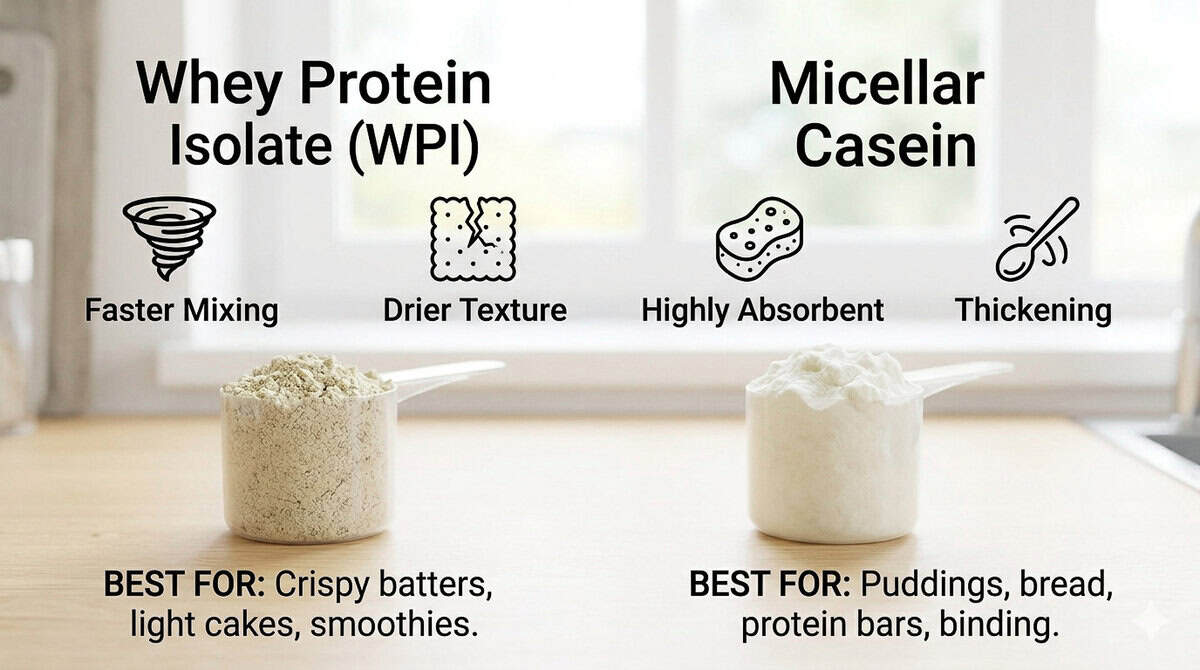
From a cooking perspective, casein generally performs better because it holds moisture well and creates a thicker texture. Whey protein isolate, on the other hand, is more heat-sensitive and can dry out quickly when baked or cooked.
Can protein cause bloating or gut issues?
Protein itself isn’t usually the problem. What’s added to it often is.
Common culprits include:
- Excess lactose (if you’re lactose intolerant)
- Some sugar alcohols
- Gums and thickeners in high amounts
High-quality protein with minimal ingredients is far less likely to cause digestive issues.
When would I choose whey over casein (or vice versa)?
Choose whey if you want:
- Fast digestion
- Post-workout recovery
- A lighter, thinner texture
- Certain recipes require a taffy-like texture.
Choose casein if you want:
- Long-lasting fullness
- A thicker, creamier texture
- Something before bed or between meals
- Typically performs better in recipes
Many people use both, just at different times.
Is protein important during menopause?
Yes, arguably more than ever.
During menopause, protein helps support:
- Muscle mass (which naturally declines with age)
- Bone health
- Metabolic health
- Satiety and appetite regulation
Adequate protein intake can make a big difference to strength, energy levels, and body composition during this stage of life.
Does protein matter more as we age?
Absolutely.
As we age, our bodies become less efficient at using protein, a concept known as anabolic resistance. This means:
- Older adults often need more protein, not less
- Strength, balance, and independence rely heavily on muscle mass
Protein isn’t just for athletes and bodybuilders; it’s foundational for healthy ageing.
Can protein help with weight loss?
Yes, but not in a magic way. Protein supports weight loss by:
- Increasing fullness/satiety
- Helping preserve muscle while dieting
- Reducing cravings and snacking. It doesn’t burn fat on its own, but it makes maintaining a calorie deficit far more sustainable.
What protein is best for ice cream, bars, and baking?
- Casein protein or some whey blends (Signature Protein) works best for baking and ice-cream-style recipes because it’s thicker and more heat-stable.
- Whey protein isolate works better for shakes and drinks, but can dry out baked goods if overused.
How much protein is too much?
For most healthy adults, protein intake of 2.0–3g per kg of body weight is well tolerated.
Problems usually arise not from the protein itself, but from:
- Very low fibre intake
- Poor hydration
- Low-quality protein sources
If you have existing kidney disease, always consult your healthcare professional.
How much protein do I need if I train vs if I don’t?
A general guide:
- Sedentary: ~0.8–1.0g per kg bodyweight
- Active / resistance training: ~1.6–3g per kg bodyweight
This can vary based on age, goals, and total calorie intake.
What should I look for in a high-quality protein?
Key things to check:
- Clear protein source (e.g. whey isolate, whey protein concentrate, milk protein, micellar casein, pea protein, etc)
- Transparent lab testing (3rd party testing proof)
- Minimal fillers and gums
- Sensible sweetener use
- No added amino acids (i.e. amino blends) in the ingredient list ← This is a cheap way for supplement companies to fake higher protein contents and cut costs
Are there health benefits of protein beyond muscle?
Yes, protein supports:
- Hormone production
- Immune function
- Skin, hair, and nails
- Blood sugar control
- Recovery and tissue repair
It’s a basic nutritional building block, not just a gym supplement.
Does protein spike blood sugar or insulin?
Protein causes a much smaller insulin response than carbohydrates.
- Whey can cause a very modest insulin response
- Casein tends to be slower and more stable
For people with metabolic disorders, pairing protein with fibre and fats and avoiding high-sugar formulas is key.
Why does quality protein cost more?
Because it costs more to make properly.
Higher cost usually reflects:
- Better filtration methods
- Higher protein purity
- Independent lab testing
- Fewer fillers and cheaper additives
- Higher quality ingredients (i.e. better flavours cost more)
Cheap protein is very likely to cut corners somewhere — usually where you can’t see it. Or, they hide it in plain sight (by adding cheap amino acids to their product to fake a higher protein content).
What should I prioritise when buying protein?
Focus on:
- Ingredient quality (check the ingredient list!)
- Digestibility
- Transparency and trust (where it is made, do they offer lab testing, do they have a product guarantee if something doesn’t go as planned)
- Taste you’ll actually enjoy
Is collagen protein worth it?
Collagen has a fair amount of research to point to the fact that it’s great for:
- Supporting skin elasticity and hydration
- Helping joint comfort and mobility
- Supporting recovery from physical activity
- Gut health support (theory + early research – so take that with a grain of salt!)
So if your goal is about structural support, collagen can be valuable.
The Core Difference: Processing & Why It Matters in Baking
To understand why these two powders act completely differently in a mixing bowl, we have to look at how they are processed. Both come from milk, but they are separated during cheesemaking: whey is the liquid byproduct, while casein forms the solid curds.
- Whey Protein Isolate (WPI): WPI undergoes an advanced filtration process to remove virtually all fat, lactose, and moisture, leaving a powder that is usually over 90% pure protein. Because it is highly refined and lacks fat or complex structures, heat causes it to dry out and harden rapidly.
- Casein Protein: Casein is processed gently to keep the “micelles”—the natural colloidal structures of the milk protein—entirely intact. These micelles naturally trap moisture and repel heat. Unlike whey, casein absorbs massive amounts of liquid and expands, forming a thick, gelatinous gel when wet.
Using Whey Protein Isolate
Because WPI has a low water-binding capacity and releases moisture rapidly when heated, it causes the surface of your food to dehydrate quickly in the oven or fryer. This rapid dehydration is exactly what you need to create a rigid, crunchy structure. If you try to use it in a standard cake, however, that same drying property will leave you with a rubbery, cardboard texture.
Light, Delicate Sponge Cakes: Used in very small amounts alongside nut flours to add structural lift without weighing the crumb, like our Soul Bread recipe.
Best Suited For: Savoury coatings, crunchy protein granola, light wafers, and thin, crisp cookies.
Using Casein Protein
Think of casein as the sponge of the protein world. In the kitchen, it behaves less like standard flour and more like a high-grade binding agent or thickener—much like how chia seeds or gelatin bind to liquid and swell up.
When you mix casein into a batter, it doesn’t just dissolve; it actively drinks up multiple times its own weight in liquid, instantly transforming your mixture into a thick, heavy paste. Once it goes into the oven, it holds onto that moisture, refusing to let the heat dry it out.
Because it traps moisture so beautifully, it is your non-negotiable baseline “flour” whenever you want a recipe to stay:
- Soft and cake-like (like a soft-baked cookie)
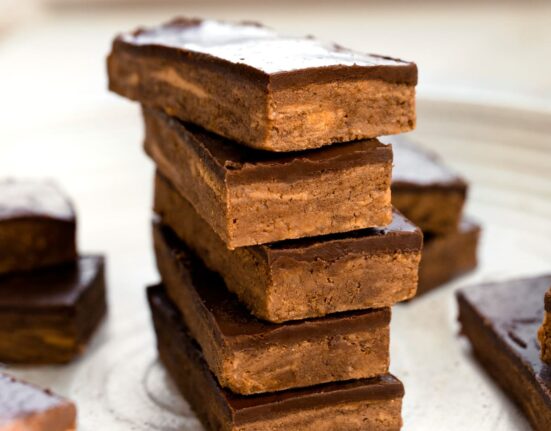
- Thick and malleable (like a fudgy protein bar filling)
- Doughy or pliable (like a low-carb protein cupcakes or flatbread)
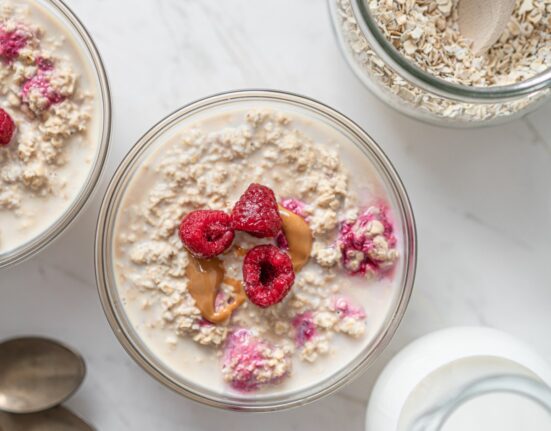
- Creamy and smooth (like a rich ice cream base or custard)
If you tried to make a chewy protein bar using whey isolate, it would turn into a dry, crumbly rock within a day. Casein is the secret ingredient that keeps things beautifully soft, dense, and gooey.



Leave feedback about this